Friday, 12 January 2024

Remembering Slovenia

A friend who was planning her next travel adventure asked me recently to recommend a country I'd enjoyed. Without hesitation I said 'Slovenia'. 'Oh, I'm not even sure I know where that is', she replied.  I can't say I blame her. We visited in 2001 and, almost 25 years later, Slovenia still flies under the tourism radar. It's a pint-sized country, far smaller than Tasmania and with a population about the same as Brisbane. It's surrounded by bigger, attention-seeking countries such as Italy, Austria, Hungary and Croatia. 

But what it lacks in size and recognition, it makes up for in spectacular snow-capped mountains, Alpine villages cradled in lush green valleys, spring-fed lakes, aquamarine rivers gushing and rushing through gorges, fairytale castles, friendly people and ice creams! Feeling nostalgic, I reached for my photo albums (pre digital technology here) and my trusty diary and settled in to revisit this lovely country. Photos are a combination of mine and Steve's.

We began our journey in the capital Ljubljana nestled alongside the peaceful Ljubljanica River. It's a university town so lots of young people, gorgeous pastel-coloured baroque architecture, narrow, cobbled pedestrian-only streets, elegant shops and equally elegant people, and all the statues and plaques in the squares and parks were of cultural figures - poets, writers, playwrights, musicians - not a politician, soldier or founding father among them. Yay for culture!  And everyone was eating an ice cream.


We ambled through the market ...
A mushroom seller

... popped into a church...
... wandered along the riverbank...

.. spotted this church door - so intriguing and playful...
.. and visited Lljubljana castle.
A view of Lljubljana from the castle.

We hired a car and set off into the countryside. Off the main highway, the 'road less travelled' took us through alpine valleys with picture-perfect views of cosy farmhouses set within lush green fields, their windows ablaze with red geraniums.


Climbing higher, we were soon surrounded by high, thickly forested hills. Zigzagging even higher we could see tiny villages below us. The red-gold autumn leaves of the linden, aspen and alder trees were spectacular.
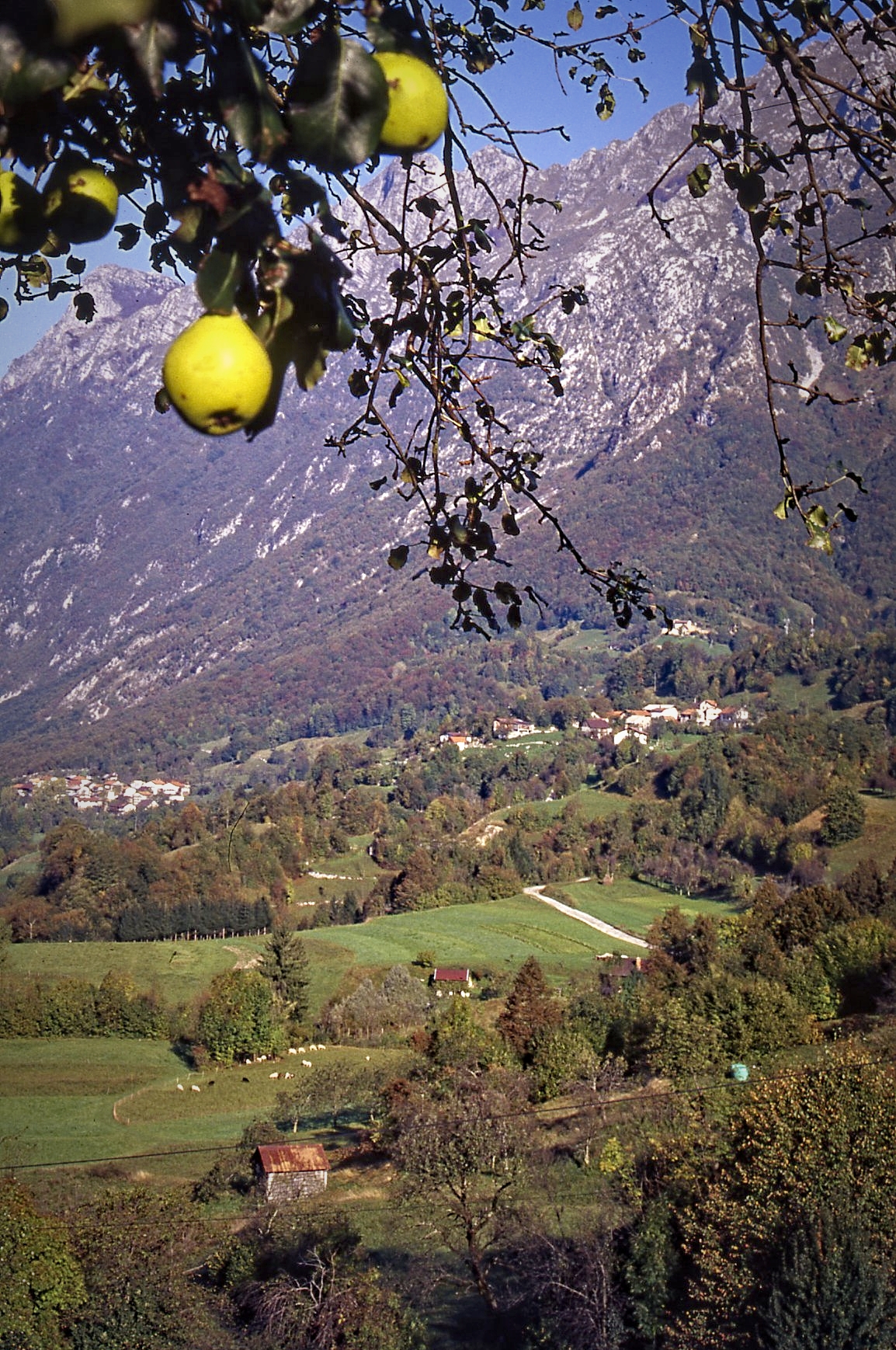
Here a quince tree frames the view.
Down into a valley again and making for the town of Kopra we came across a raging river tumbling over boulders.
Kopra was once the centre of iron and still has an active forge and wrought iron industry.
An ironmonger works on part of a fence.

Our next destination was Lake Bled, one of the major attractions in Slovenia. In the centre of the clear, placid blue water is an island with a church, while in the background, high on the cliffs overlooking the lake is a medieval castle. A boatman will row you out to explore this tiny island. 


A fairytale castle on the clifftop.

Autumn foliage captivates us around Lake Bled.

We crossed the river and walked through a steep and winding forest path to approach the castle. Over a drawbridge, up a steep cobbled path and then through the large, imposing wooden doors.  The views from the courtyard were wonderful.

About 5kms from the town of Bled is the Vintgar Gorge. A winding wooden walkway takes you alongside the turbulent river which rushes along in thunderous eddys and swirls, over boulders, around bends, under bridges and between narrow rocky gorges. In all, it is a spectacular experience. We were lucky to be here in autumn with the vivid golds and reds of the leaves providing a perfect backdrop to the creamy  aquamarine colour of the water. The river began placidly....
... then picked up speed as it tumbled on its way. The walkway was perilously close, making you feel that you are part of this amazing landscape.


Spot the walkway in this photo.

The following day we ventured into the Julian Alps, travelling through villages nestled in rolling green hills with steep rocky crags on either side of the narrow road, cowbells jangling from the necks of sturdy Alpine cattle, hay ricks dotted in the fields, the rich russet-red leaves of the chestnut trees mingling with the vivid green of the pine trees. 

Steve waves a greeting.

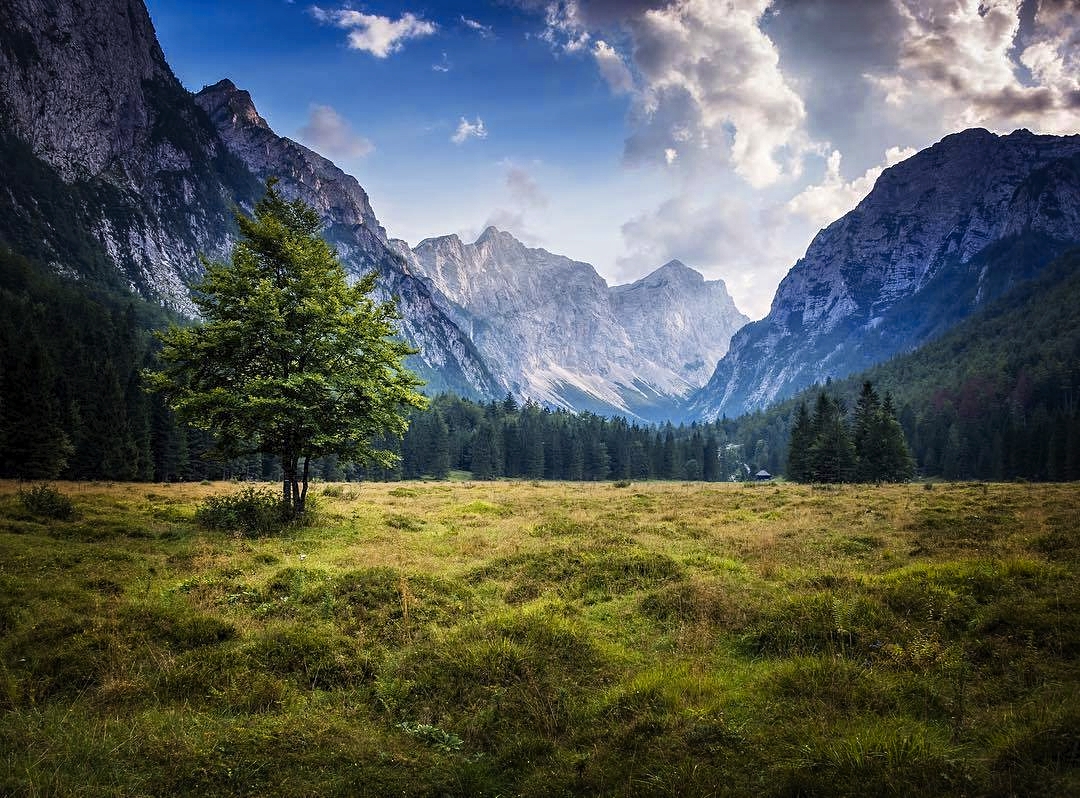
We stopped in a meadow where we found a little cottage, locked for the winter. It was all so fairytale-ish I would not have been surprised to see the witch from Hansel and Gretel appear around a corner and disappear into the gloomy forest beyond the meadow. 

The next day we headed to the mountain pass at Vrsic. Mountains seemed to envelop us. 

Down into a valley, with amazing landscapes at every turn of the winding mountain road. The villages we drove through here were centres for hiking, rock climbing, canoeing and paragliding. Next stop was at Kobarid, the town famous for being the staging point for the Italian army in World War 1; it was called Caparetto then.  It was here that a 19-year-old volunteer ambulance driver (by the name of Ernest Hemingway) was stationed. Hemingway based his novel Farewell to Arms here. We saw his house and visited the museum which tells the story of the Italian campaign. 


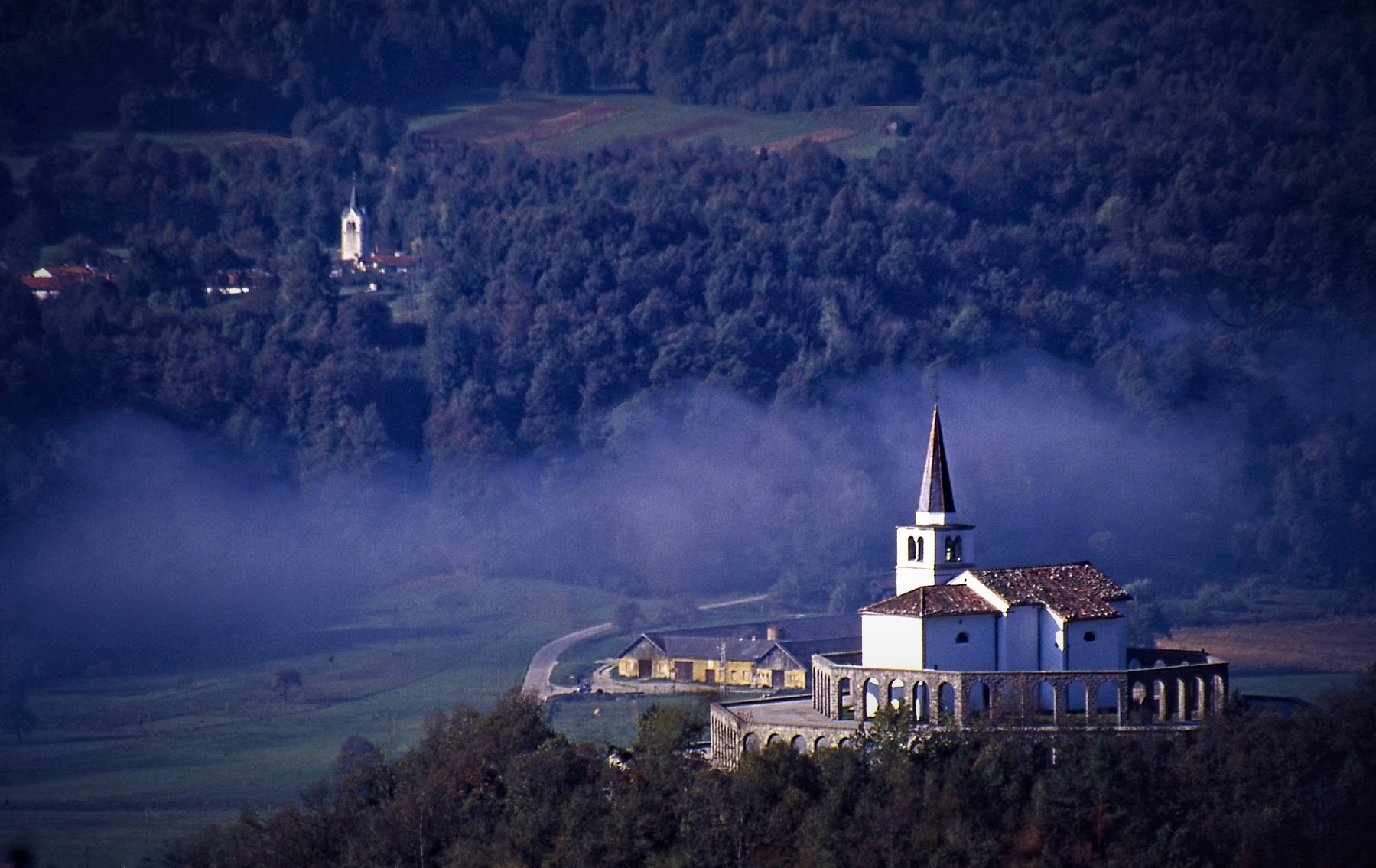
The next day I recorded in my diary.' This morning mist hung in the valley, swirling around church steeples and forming a river of cotton wool'. A pretty accurate description I have to say.


Another breathtaking sight with the mist still lurking in the valley was the Napoleon Bridge, an arched stone bridge spanning the Soca River.

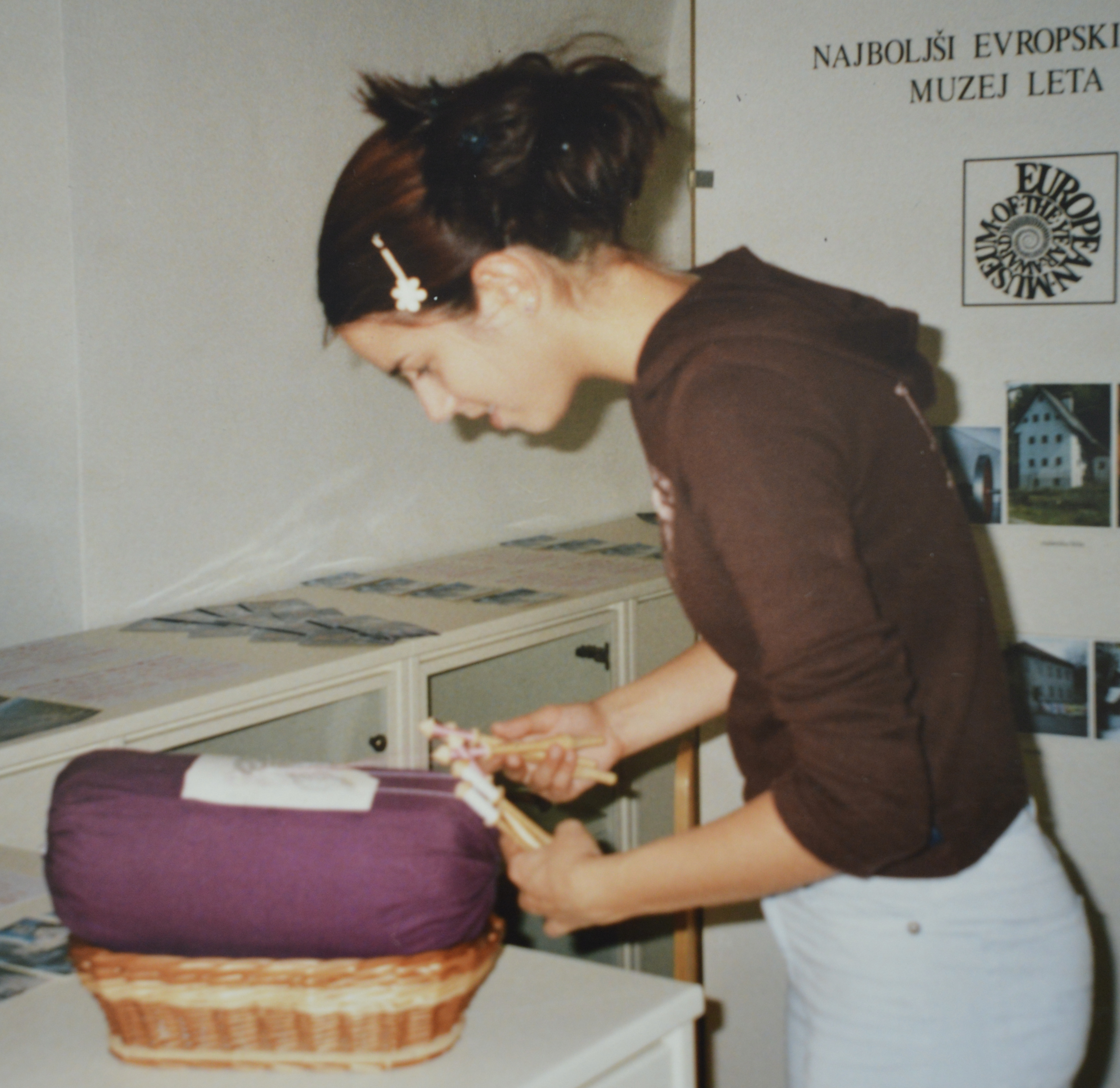
We drove through a number of villages before stopping in the town of Idrija where we had booked a room in a 15th century manor house. It's a former mining town  (a tub maker discovered mercury here in 1490). In addition, a lace school was established to promote the women's traditional craft, with the lace being exported throughout Europe.  My favourite part was the visit to the lace museum. On the walls were examples of all kinds of exquisite lace patterns. I learnt about the 'bula', a stuffed cushion on which the pattern is placed. Bobbins are used to make the pattern. (This made me remember the bobbins my mum had as she used to do tatting, a form of lacemaking.) 


A guide showed me how it was done! 

On the road again making for Lipica. We were now in the lowlands and being closer to Italy had a more Italian feel; all the houses had brightly coloured shutters, paint-faded facades and flowers oozing from window boxes and tubs. We visited a stud that used to supply the famous Lippanzer horses to the Spanish Riding School in Vienna (it no longer does this), but it was lovely to see the gorgeous grey and white horses gambolling or lazing in the lush fields bordered by trim white fences. A guide showed us some horses in their stalls.
By lunchtime we were in Piran, a delightful resort town clinging to the Adriatic and the Italian border. The main square was marbled and was surrounded by villas painted in hues of blue, pink, green, mustard.  
Narrow streets led off the square, often with washing strung across the alleys. We climbed a bell tower and were rewarded with a fantastic view across red-tiled rooftops to the port. 
We were nearing the end of our trip but had two more 'must-see' places to visit: Predjama Castle and Postojna Caves.  The castle was magnificent - built into the side of a rocky hill, it had everything a medieval castle should have: a drawbridge, a torture chamber, tunnels, slots for pouring burning oil on the enemy, holes for cannons. The many rooms were sensitively decorated for the times with mannequins dressed as knights, friars, ladies, evoking a feeling of the past. 


We then went on a guided tour of the cave behind the castle - rather spooky with the eerie darkness only lit by an occasional light and the feeling that we were deep underground. 

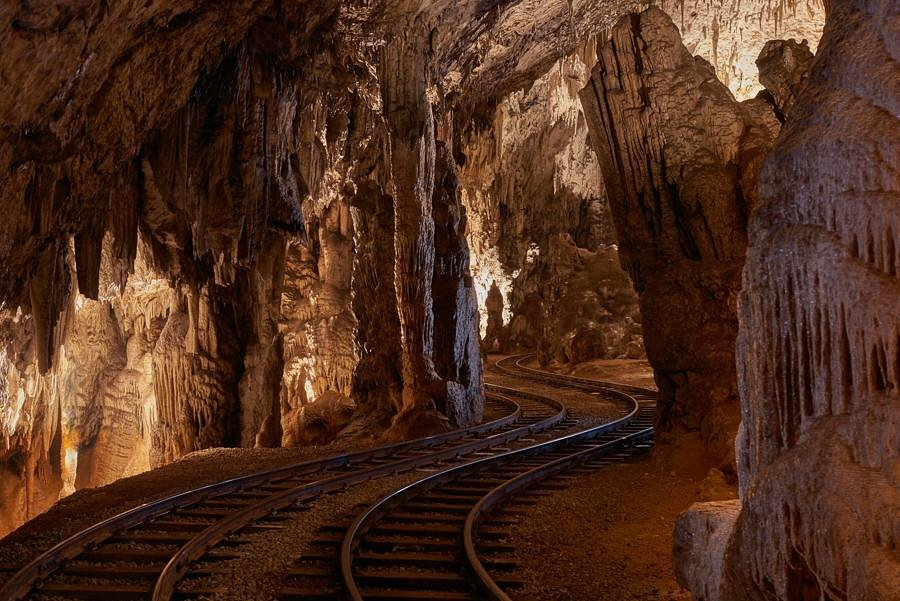
We then headed off to visit the Postjana caves, the largest cave system in Europe. It was an experience I've never forgotten, though I had to resort to my diary to feel the sheer wonder of it all again. I'm not one for pokey caves (Predjama's Castle cave was claustrophobic enough for me).  Our hearts sank when we arrived at the entrance with about 200 other tourists and sat in an open carriage in a very long 'train'. Oh boy, we thought - 'Disneyland'. But what a surprise we got. We sped along at a fairly fast pace through the cave system. The carriages made their way through cavern after cavern, passing magnificent stalactites, stalagmites, flows, columns, and aquamarine pools in a never-ending extravaganza. The sheer size of everything was overwhelming. At times we were incredibly close to the formations and  other times the roof soared metres overhead. After about 4kms or so we stopped and were asked to head to the appropriate language sign. At the 'English' sign, a guide then took us for a walking tour that was informative, exciting and wonderful - all at once. The sheer expanse of the place took my breath away. A huge cavern is called the Concert Hall and it is here that they hold musical events. I can only imagine what those must be like. There are no photos as Steve didn't have a flash and my camera could not take in the sheer majesty of what I was seeing. We bought a book instead. That book is packed away somewhere. My next project is to find it! These photos are taken from the Trip Advisor website and were taken by the cave management.


My final photo is one that I think sums up Slovenia for me. A beautiful country. 
And happy memories for us.

Sunday, 31 December 2023

And so the year ends... and a new one begins

 A cliché I know, but the years do seem to be flying past at a faster rate lately. Perhaps it's because I want to fill these days with as much adventure, fun, reading, gardening, travel and keeping in touch with friends as I can. How on earth did I manage to really live before retirement? Having said all that, it's been a quiet year, although we did get the 'adventure' and 'travel' part in when we went to New Caledonia in June.

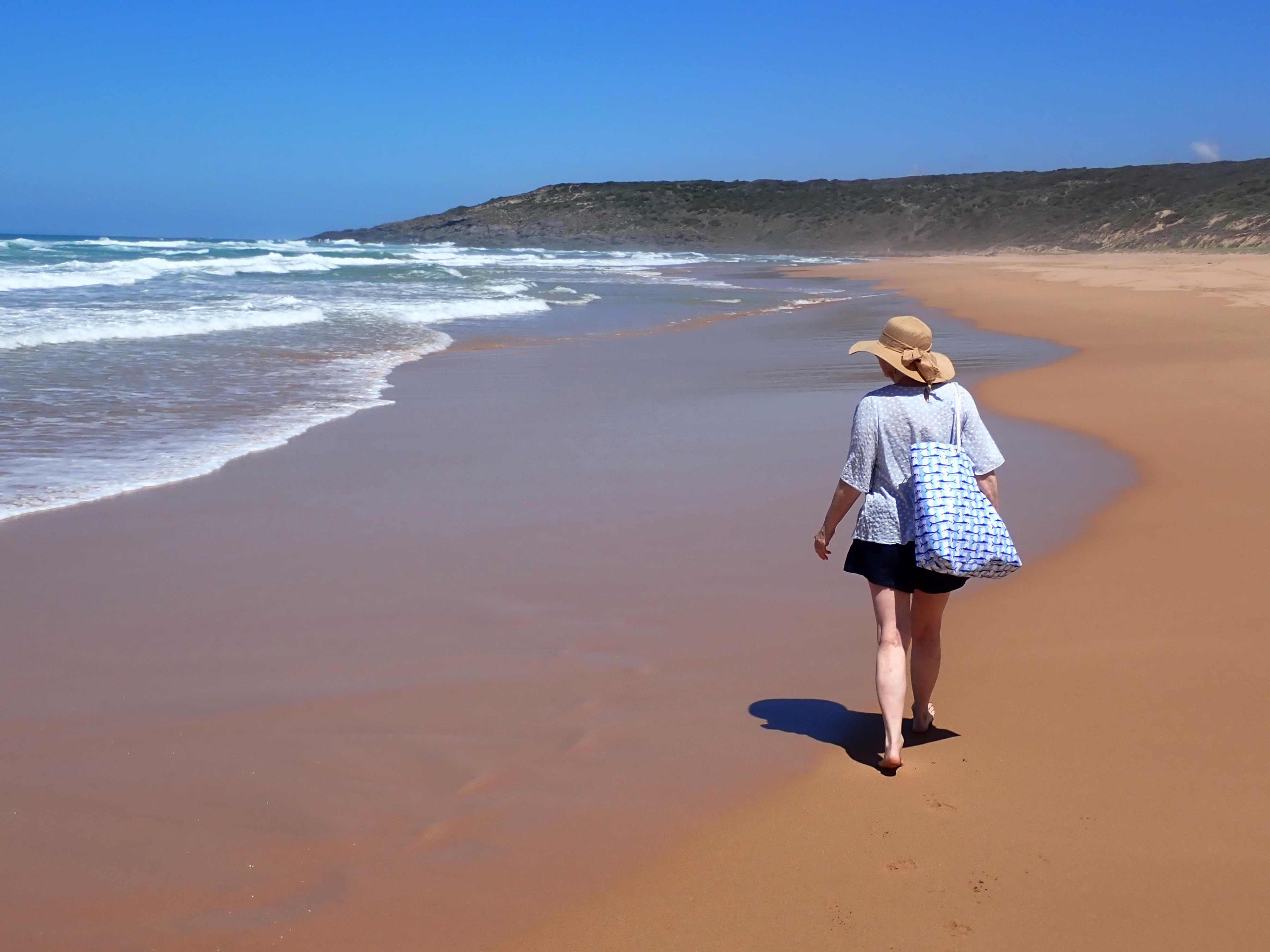
But now, with a few days left of 2023, we're still having weird weather with the sun being extremely petulant. Lately, we've had thunderstorms, fierce winds, gloomy skies and rain. One glorious day actually happened a few days ago much to everyone's surprise and became the talk of the town with strangers at the checkout commenting on the 'lovely day', people passing me on my daily walk nodding and saying 'Lovely day', and neighbours chatting across the garden saying 'Lovely day'.You see, the sun came out and there was nary a cloud in the sky.  To make the most of it we drove to Waitpinga Beach not far from home. Here, the endless stretch of sand, sky and surf infused with the warmth of the sun was a balm to the soul. Such peace and quiet (apart from the hammering of the foamy, frothy surf) and a feeling of 'all's right with the world'. 


Christmas Eve was celebrated with a Moscow Mule, courtesy of the Chambord (raspberry) liqueur Kate gave us.

Christmas Day was full of presents, prawns and pavlova, all enjoyed with equal enthusiasm. 

One must never decide that a particular present is 'the best' but it was hard to go past the wonderful surprise of receiving the catalogue from the Clarice Beckett art exhibition of 2021. I wanted to buy it after seeing the exhibition but it was too expensive. Fast forward to Christmas Day and there it was. Steve had bought it but 'misplaced' it for a while. It is a gorgeous reminder of the beautiful paintings I saw and admired. The cover is especially appealing as it resembles one of her framed paintings. 

Here's our annual Christmas photo.
And I've popped this one in to show the lovely top Steve gave me. Sadly, our very cool weather prohibits me from wearing it at the moment. 

And so to my birthday, a wonderful day peppered with emails, texts and phone calls from friends near and far - a phone call from Sharon in Perth and FaceTime with Kate in Melbourne. Then it was off to the Forktree Brewery, a fabulous country restaurant about an hour or so north of us. The food was generous and yummy (especially the dessert of which I enthusiastically partook) washed down with a local sparkling wine. Friends Petra and Gary came with us  to make it even more enjoyable. I tried to look colourful and cheery despite the cold weather.

The last two days of the year were spent marketing - Port Elliot on Saturday and a twilight market on the Victor Harbor foreshore on Sunday. New Years Eve was spent devouring a magnificently calorific trifle, sipping French wine and watching a Doris Day movie. Long gone are the days (and I remember this one particularly well) when I crept home at 5:00 am after a night of eating, drinking and dancing with friends. I mentioned this to someone recently and then realised I was talking of a New Years Eve 55 years ago!

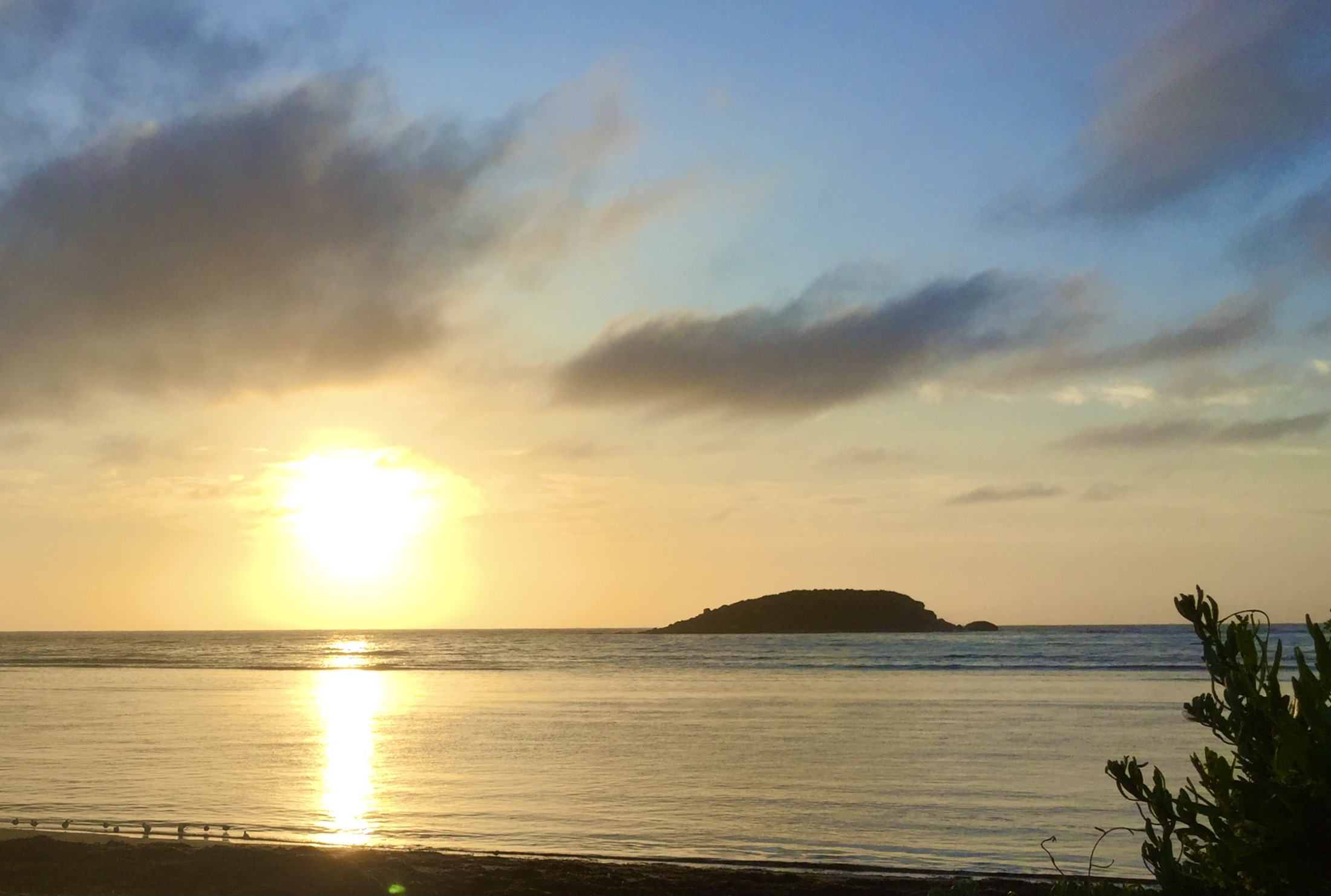
This morning - and it is now 2024 - I woke at sunrise and walked along the bay, meeting no-one, savouring the peace and quiet, and contemplating on what this new year holds in store for us. 


Friday, 17 November 2023

In praise of Vegemite

 Of course Steve's reaction when he first tasted Vegemite was typical of non-believers: 'Tastes like the scrapings from the inside of a sewage pipe', he declared. Ouch. And his opinion hasn't changed in 40 years. I admit it's not for everyone, but many Australians have been eating it for a very long time. And that's the reason I am writing about Vegemite - this iconic food is celebrating its 100th birthday this year. Wikipedia describes it quite well:

'Vegemite is a thick, dark brown Australian food spread made from leftover brewers' yeast extract with various vegetable and spice additives. It was developed by Cyril Callister in Melbourne, Victoria, and it first hit stores on 25 October 1923.'

In the beginning: How did it come about? Following the First World War, British imports to Australia were disrupted and chemist Callister was given the task to make a similar product to the now-unavailable spread from England called Marmite. He did this by using the yeast being dumped by breweries, turned it into a clear liquid extract and added salt, celery and onion to form a sticky black paste. (I guess it does sound awful but I've always enjoyed the salty taste and really did miss it when we went on holidays overseas.)

Hmm ... not an overnight success: A competition provided a name - Vegemite. It was initially marketed as beneficial for children's health but was not immediately successful. In fact, it took years. They tried a name change but that didn't work and it was not until 1935 that things started to change for the good. 

Success at last: The company Callister worked for had merged with the American firm Kraft in 1926. Almost 10 years passed with Vegemite still flying under the radar. Then, in 1935 they decided to use Vegemite to promote Kraft cheddar cheese. I loved their promotional gambits. They gave away Vegemite coupons with cheese products; they had limerick competitions with American Pontiac cars as prizes; a promotional song was developed. Vegemite was eventually endorsed by medical authorities as being rich in Vitamin B and was given to World War II troops in their army rations! Yay - Vegemite was finally getting its day.

A bit of Vegemite trivia: In April 1984, a jar of Vegemite was the first product in Australia to be electronically scanned at a checkout. 

My role as a jar of Vegemite: When we lived in Tasmania, my boss celebrated getting her Australian citizenship with an Australiana party. What to go as? I decided a jar of Vegemite would be appropriate. A local disposal store provided me with everything I needed - rubber underlay for the body (the added bonus was that the soft rubber allowed me to sit down when I got tired);  cardboard for the top; material for the label.  A friend of Kate's designed the Sydney Harbour Bridge for Steve, while I added the waves on his blue shirt. What a couple.

There's always a jar of Vegemite in my pantry, though I'm afraid I still can't entice Steve to have another taste. 

And finally: Not forgetting Men at Work's 'Vegemite sandwich' reference in their song 'Down Under', other authors have also penned their allegiance to the product. In a book I've just read the main character says, 'Let's go and have some lunch. I'm starving. Have you got any Vegemite?' to which her mother replies 'I think we can do better than Vegemite'. The main character replies, 'Wash your mouth out. There is nothing better than Vegemite'.  
*********************************

Wednesday, 25 October 2023

We visit the Currency Creek Arboretum

I always thought an arboretum was a forest of different trees planted for our pleasure. But I now know I was misinformed, and an arboretum is actually a place where trees are grown for scientific and educational purposes.  After recently visiting the Currency Creek Eucalypt Arboretum on one of its occasional open days, I also learnt a whole lot more about the many eucalypt species we have in Australia and just what happens at this particular arboretum.

To put you in the picture, I'll summarise the information on the sign erected at our meeting spot.

The arboretum is a specialist eucalypt arboretum and is privately owned, self-funded and managed by Dean Nicolle and his partner Annett Boerner. Its main purpose is research into Australia's eucalypts (genera Angophora, Eucalyptus and Corymbia).  It has the largest collection of eucalypt species in the world, with over 900 species. There are over 8,000 individual trees  planted on the site. 

A substantial crowd had turned up. Dean introduced himself and set about explaining the purpose of the arboretum. He was a wonderful guide, explaining scientific information clearly, showing us examples, and giving us time to ask questions - and also warning us to be careful if we spotted a snake. Eek! 

As it's a research site, it's not carefully manicured nor are there signs or labels on the trees (except for the ones he's placed purely for us on this open day).We learnt that all the plants have been grown from seed collected from wild populations all over Australia. Eight seeds from an individual tree are taken, with four preserved as seed and the other four nursed into seedlings then planted in the arboretum. Dean explained that, unlike many arboretum which usually only plant one tree of a kind, planting multiple plants from each seed gives a more accurate representation of the tree's genetic makeup. They are also planted together in a row to make it easy to check growth patterns, flowering, health, diseases, and a host of other information that is painstakingly recorded. 

Here are two images showing the rows of trees. 

Dean took us to trees with signage so we could learn more about a particular genera - indicating where the seed had been sourced, when it had been planted, growing habits, flowering and who had named it.


One tree flowering at this time of the year had gorgeous bright yellow flowers.

I was intrigued to find out how the trees would grow if they weren't in their 'natural habitat', that is, alpine species or desert lovers. Evidently, the site at Currency Creek has low rainfall so many desert species can be grown, while irrigation assists higher rainfall-needing species. The soil is well drained and is a sandy loam free from limestone which is apparently 'a good thing' as Dean explained, helping him grow a wider range of eucalypts. Crucially, another benefit that arises from this arboretum is the ability to maintain a seed bank of endangered species, trees wiped out in ferocious bushfires or affected by global warming. 

On we wandered, looking and learning how the seeds were regenerated by fire, birds, wind and water or gravity.

The painstaking research provides information of the potential of the trees for various uses. In particular, Dean advises local councils on what eucalptys are appropriate as street trees or in parks, and what are suitable types for the home gardener. This valuable information is becoming crucial with global warming changing the growing requirements of these trees. 

I thoroughly enjoyed every minute (especially as we didn't spot any snakes) and learnt so much about an arboretum. Here are some final photos showing the variety of eucalypts we saw.


History alert
And for those who love word origins: A eucalypt sample was collected on Cook's 1777 voyage on Bruny Island (Tasmania) and taken to the British Museum where a French botanist working there - Charles Louis L'Héritier de Brutelle - named it Eucalyptus, coining the generic name from the Greek roots eu ('good' or 'well') and kalypto ('covered or concealed'), referring to the bud cap which protects the flower parts as the flower develops. (Source: Wikipedia)
***********************