Tuesday, 29 October 2019

Mauritius: We explore the north

When we were shivering in our July winter, the tropical island of Mauritius (about 6,000 kms due west of Perth across the Indian Ocean) seemed a likely candidate for our next holiday. We arrived in October to spend 9 days exploring as much as we could.

In a nutshell: much smaller than Tasmania but with 1.2 million people; uninhabited until 1598; a French then English colony, now a republic; multi-cultural (Indian, African, Creole, Malay); diverse landscape of mountains, beaches, deep valleys and forests; many endemic and rare birds and flora; economy based on agriculture, sugar, tourism, financial services; while English is the official language, 95% of people speak Creole (a phonetic version of French). 

First up was a day trip to the capital Port Louis. We took the local bus for a few rupees. The waterfront has been developed for tourists so was modern and clean. There was a large shopping precinct, cafes, a cinema and outdoor restaurants.
Here I found a statue to Nicolas Baudin, the French explorer (who also sailed through Encounter Bay and named the Fleurieu Peninsula where I live, back in 1802). On his return journey from mapping the coast of New South Wales his ships stopped in Mauritius where he died of tuberculosis, hence the commemorative bust.
Hinduism accounts for almost half the population's religion and there are many Hindi temples here. We visited Kannanur Mariamman Kovil, a very colourful encounter.

However, one street back from the waterfront it was a different story. The buildings were rather rundown, Chinatown was full of wooden buildings from around 1900 with flaking paint, narrow shops selling all manner of goods, and narrow cobbled footpaths. See what I mean?


We visited the huge covered market which was colourful, noisy and bustling with shoppers.


We decided to walk to Fort Adelaide, built in 1834 atop a small-ish hill (though it didn't seem that small as we walked slowly up the steep streets in heat and humidity). It was built by the English to repel the French but no cannon was ever fired. I loved the brightly coloured gardens we passed on the way.
 Steve takes a photo of other tourists in this vast and rather forbidding-looking space.


The following day (by now with our hire car) we visited two French colonial mansions; there are few of these left on the island, but the ones that have been saved and restored are charming and very evocative of times past - just my cup of tea. La Demeure de Sainte Antoine, built in 1830, is now a restaurant and upmarket guesthouse, so no actual cost to wander around. It was simply lovely.
The house 

Miss Glamour trying to recreate a 19th century vibe.


The restaurant
The owner's private house
From the small and charming country estate to the grand chateau...
The next house was the Chateau de Labourdonnais. Built in 1859 it was beautifully furnished with French and English pieces, and also had a rum distillery. As in all these homes, the rooms have large French doors opening onto wide verandahs, creating natural airconditioning.

The chateau was approached via a long allee.

This is a photo of the original family on the steps. I tried to imagine them here. It always amazes me to see photos like this one where the people are fully clothed in such hot and steamy weather.


This was the gorgeous wallpaper...
 ... and a bedsheet...
 ... and a sumptuous French painting.
Outside, the original sugar mill still stands. The tree in front is a coral tree, so imagine it in full scarlet bloom.
 We wandered the grounds...
 ... saw the old kitchen ...
... spied some large tortoises...
... and had a rum tasting.
Our botanical fix came when we visited the Pamplemousse Botanical Gardens. Originally the governor's 1735 vegetable garden, it was redesigned in the 1770s, and its 37 hectares are packed with an amazing variety of palms (one palm, the 25metre-tall talipot, bears flowers once in its lifetime of 30-80 years then dies), lily ponds, lotus, bamboo groves, spices, giant tortoises, bats (Mauritius' only endemic mammal) and deer (an introduced species).  It claims to be the oldest botanical gardens in the southern hemisphere.


The next day we drove across the top of the island from east to west. Disappointingly, we did not see the coast!!! What? We were driving right along the narrow coast road. But this is the domain of exclusive resorts, luxury hotels and private homes hidden behind tall stone walls which gave us tantalising glimpses of lush tropical gardens beyond. And here in the north of Mauritius, most of the beaches are private. A pox on the rich. There is only one public beach along the entire northern coastline, and a small one at that.

I really wanted to see the cannons and fort situated on a small promontory in the far north-west. I had read that the French had used the site as a garrison and battery and the British as a military and quarantine post. Not much remains, and today these colonial relics are unfortunately in the grounds of a swish golf resort in Grande Baie, the main resort town in the north. Steve talked to the man at the gate who interrogated us, and, just short of asking for our passports, called up reception and we were allowed in - though of course we had to report to reception and provide our credentials. High security indeed. But it was a pleasant experience walking these hallowed grounds and we eventually found the cannons ...

... and the garrison, which is now a teenagers' retreat.
This is how the rich survive.
The next day we drove a short way down the western coast to Mont Choisy, which was a public beach. It was a long beach with lots of lawn and plenty of shade.
 Ok so I didn't swim as the water was a bit too cold but I did admire the peaceful, turquoise water.
And I saw this little bird which I later discovered is very common and is grandly named the red-whiskered bubul. 
Later, we tried to find a lake, got lost, but did get some good views of a typical town in the mountains and Mauritian scenery...
I absolutely loved the tropical plants we saw with their vivid colours set against emerald green leaves.  Here is a sample.  Not sure of any of the names.


For our last night in the north we went to a gorgeous seafood restaurant. I quote here from my diary, though be warned, I wrote this at the end of a long day and the prose would never win a Booker prize.

The sun had not yet set, so for half an hour or so we admired the view from our table on the terrace - boats moored in the bay, calm water lapping the rocky shore, the apricot hues of the setting sun casting a gentle glow. The service was great, the food really good (a ruby schnapper for Steve followed by a hot chocolate pudding, tiger prawns in a ginger sauce for me and a creme brûlée).    

And so ends our northern Mauritius sojourn. We found the people very friendly and helpful, the many fish dishes we ate were extremely yummy, the landscape diverse and lush, and the main highways excellent. However, all other roads were narrow and clogged with traffic, signposting or the lack of it drove us mad, and there were far too many private beaches.

I'll finish with two lasting impressions of the north.

1. Delicious fruit juices and curries.
 2. Endless fields of sugar cane.

Next up - central and south Mauritius.  Coming soon.......

Monday, 16 September 2019

Weekend fun in the sun

With brilliant sunshine and blue skies, what could be better than a trip into the countryside. Friend Dolly and I set off for Willunga to visit a garden in South Australia's Open Garden scheme. It sounded very promising - just what we wanted to see - a garden on clay soil with lots of drought-resistant plants set off by pieces of slate - a homage to Willunga's heritage. I wasn't really aware of the extent of the slate history here but soon learnt that it was discovered in the nearby hills in 1840 and by the 1870s was a huge industry, with the slate reckoned to be far superior to that from England.

The garden was located on one of the original half-acre blocks surveyed in 1839 when Willunga was first settled. Unfortunately, we found it a little disappointing: the plants weren't labelled, the clay had been covered with tons of topsoil and compost so we didn't learn anything about gardening on clay soils, and the majority of plants were easily recognised (I love finding unusual plants in Open House gardens). I guess we hadn't read the information sheet that closely and found the garden itself was just a smallish suburban garden and not the rambling country estate we had envisaged. Here, Dolly reads the background information more closely - by the lovely edging slate wall.

Perhaps I am being over-critical because of our pre-conceived ideas. There was lots of lavender and native plants, good choices for the hot summers here. It was all about sustainability and knowing your environment. And of course, lots of bees.


And succulents.


I loved this glimpse of colour in a tiny shaded area.

It didn't take us long to explore the entire garden. While it was colourful and jam-packed with plants, it just didn't seem to have that something 'special' we were hoping for. To be fair, the admission price also got us a free visit to the Slate Museum, but as it was an hour or so until the next visit time, we reluctantly moved on.
So it was off into the town...
... and the markets ...

 ... and a yummy stop for a cranberry and pistachio scone with honey butter at the Redwood Oven ...


... with a hot chocolate of course.
A lovely end to a lovely outing.

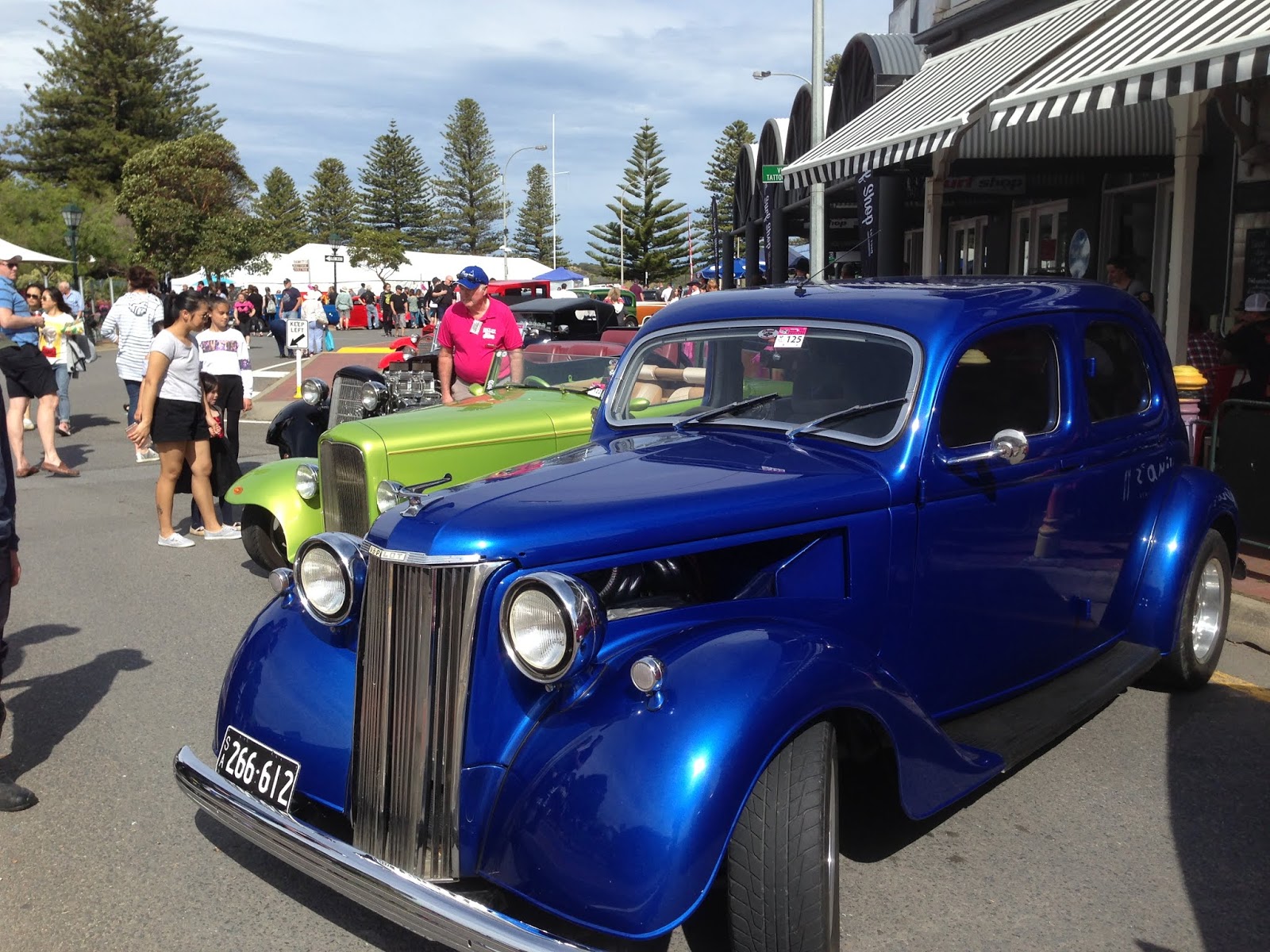
The next day Steve and I went into Victor for the annual Rock 'n Roll Festival. The highlight of this festival is always the huge display of classic cars (from the 1950s -1970s) brought to Victor by enthusiasts from all over the state and beyond. The cars spill over the grassed area and down the streets: Dodges, Cadillacs, Mustangs, Thunderbirds, Chevrolets ... and hot rods. While I know nothing about such cars (apart from seeing them in American movies) it was great to see them all 'spit and polished' with such loving care.


How on earth did they park these cars? I think I prefer my nippy 1994 Mazda jelly bean.

 There was a bit of dancing and lots of rockin' music! Everyone having fun on this sunny afternoon.
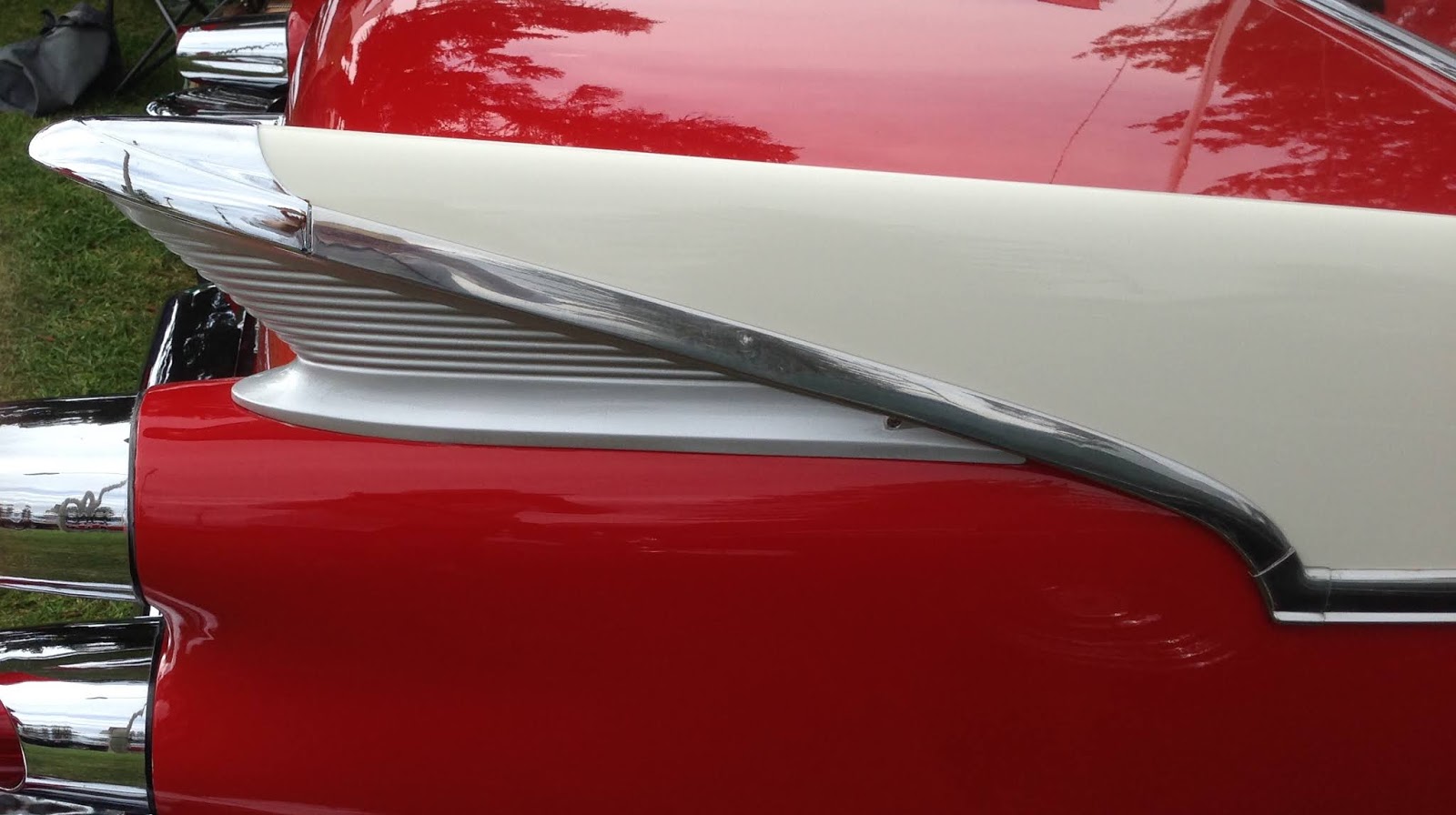
The fins on some of the cars were amazing.

And I loved the homage to the space era in this whatever it is.
And lastly ... a 1956 Chevy Corvette, the type of car that featured in the 1960s' television show
Route 66. Hmmm ... perhaps that's Tod and Buz reminiscing.
And to end our sunshiny weekend - sunshine in a bottle, thanks to generous friends and their lemons.

Sunday, 28 July 2019

River rambling

It was a cloudy day, but the sun was shining through in intermittent shafts of brightness and warmth. There was just a hint of a breeze. A perfect day to take a stroll along the Hindmarsh River a couple of ks from home. The river itself begins in the Mount Lofty Ranges and flows 23 kms south to enter Encounter Bay near Victor Harbor. There are a number of walks along its banks. For history-minded readers, it's named after Sir John Hindmarsh, the first Governor of South Australia.

We decided to take the 'Beach and Lagoon' walk that begins near the railway line, and follows the river's final push to the sea; we've done it a few times before but it always looks different depending on the weather and the light. We step over the lines and walk down a few steps until we are on the boardwalk that meanders through a paperbark forest. The recent rains have made the ground soggy, but we are well protected on the walkway. It's rather eerie, with the twisted ghostly shapes looming on all sides with branches forming a canopy overhead.

I love bark and the way it peels and reveals different colours and textures, so I'm always on the lookout for interesting shots.
We escape the forest and stroll along the walk beside the Hindmarsh River where it ends its journey and enters the sea.
It's peaceful. There's a couple walking on the beach. You can clearly see where the river joins the sea. In the background is the causeway that links Victor to Granite Island.
There's a bunch of seagulls enjoying the brief warmish weather ...
... and Mr Percival ...

We divert and follow the signs that lead us around a lagoon. It is so pretty with the still waters creating perfect reflections.


I'm not sure what this plant is but its deep pink stems (or are they flowers) made a nice contrast with the deep greens, greys and browns of the trees.


A duck swims serenely along, then all of a sudden ...
... ... breaks into a frantic flapping as it washes itself amidst a flurry of froth and bubbles.
 My patient rewarded me with this view of a honeyeater (I think).
We had almost completed the circumnavigation of the lagoon, so one last photo. 
We then retraced our steps back over the railway line, under a railway bridge and walked further upstream. The banks of the river here are thickly lined with melaleucas and other plants so it's impossible to wander down to the shoreline.  But the path is easy to negotiate, if a little muddy.
More bark for me to get excited about.
Winter-flowering wattle always adds a sparkle to the bush.
We walk as far as a bridge, marvelling at the reflections, even on this dull day, then turn and head back to the car.

But one last photo for Steve. 

This is my photo of the native hibiscus he was photographing.
A really lovely, calming walk. We'll probably do it again in the summer.